
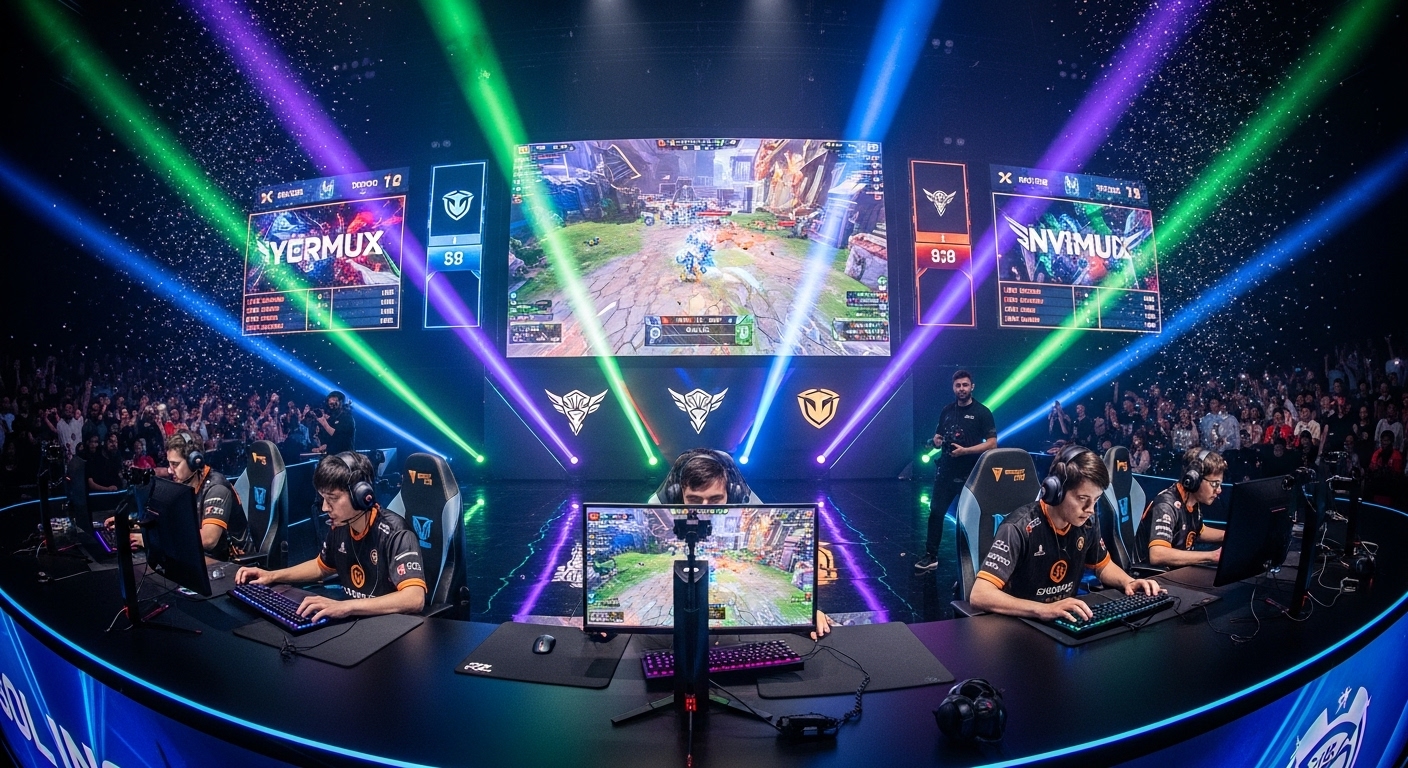
Introduction: The Digital Sporting Revolution
Over the past two decades, esports has transformed from a niche hobby into a multi-billion-dollar global industry. What was once considered a pastime for a small group of dedicated gamers has now evolved into a professional and competitive arena that rivals traditional sports in popularity, revenue, and cultural influence. With millions of viewers tuning in to watch competitive gaming, esports has firmly established itself as a cultural and economic powerhouse.
Esports is more than just playing video games; it encompasses professional competitions, global tournaments, sponsorships, streaming platforms, and the cultivation of digital communities. Its rise has reshaped entertainment, sports, and even education, creating opportunities for players, developers, sponsors, and content creators alike.
A Brief History of Esports
The roots of esports can be traced back to the early 1970s and 1980s when gaming arcades and home consoles became popular. The first known video game competition occurred in 1972 at Stanford University, where students competed in “Spacewar!” for a modest prize. While primitive by today’s standards, this event set the stage for competitive gaming as an organized activity.
The 1980s and 1990s witnessed the growth of arcade gaming competitions, often organized around titles like Pac-Man, Donkey Kong, and Street Fighter. These events, though local, created communities and rivalries among players. With the advent of personal computers and online connectivity in the 1990s, esports began taking a more structured form. Games like “Quake” and “StarCraft” became central to competitive gaming, spawning national and international tournaments.
The early 2000s marked the professionalization of esports. South Korea emerged as a hub for competitive gaming, particularly around “StarCraft: Brood War,” where players could earn sponsorships and salaries. Professional leagues, televised events, and gaming cafes proliferated, cementing esports as a viable career path for skilled players.
The Explosion of Esports in the 2010s
The 2010s saw the exponential growth of esports due to technological advancements, social media, and streaming platforms. Services like Twitch and YouTube Gaming allowed players to broadcast their matches to a global audience, creating an ecosystem where fans could engage directly with their favorite gamers. This period saw the rise of legendary teams, players, and tournaments that continue to define the industry today.
Games like “League of Legends,” “Dota 2,” “Counter-Strike: Global Offensive,” and “Overwatch” became household names in the esports community. These titles not only offered thrilling gameplay but also provided structured competitive formats, leagues, and major tournaments with substantial prize pools. The introduction of franchised leagues, such as the League of Legends Championship Series (LCS), brought stability and legitimacy to esports, attracting investors, sponsors, and mainstream media attention.
Popular Esports Titles and Genres
Esports is a diverse landscape with multiple game genres, each fostering its own competitive scene and fanbase. Understanding these genres is crucial to appreciating the depth and complexity of esports.
Multiplayer Online Battle Arenas (MOBAs)
MOBAs are among the most popular esports genres, characterized by team-based strategy, hero selection, and complex gameplay mechanics. Games like “League of Legends” and “Dota 2” dominate this space, attracting millions of viewers worldwide. Competitive matches often involve strategic planning, real-time decision-making, and coordination, making them as intense as traditional sports.
First-Person Shooters (FPS)
FPS games focus on combat from a first-person perspective, requiring precision, reflexes, and map awareness. Titles like “Counter-Strike: Global Offensive,” “Call of Duty,” and “Overwatch” have become staples of the esports scene. These games emphasize teamwork, strategy, and mechanical skill, with tournaments often played in stadiums and streamed globally.
Real-Time Strategy (RTS)
RTS games, once the backbone of competitive gaming, involve resource management, tactical planning, and unit control. Classics like “StarCraft” and “Age of Empires” paved the way for modern esports. While less dominant today, RTS competitions retain a dedicated fanbase, especially in regions like South Korea.
Fighting Games
Fighting games feature one-on-one combat, emphasizing timing, combo execution, and character mastery. Titles like “Street Fighter,” “Tekken,” and “Super Smash Bros.” have cultivated passionate communities and thriving tournament circuits, including the famous Evolution Championship Series (EVO).
Sports Simulations
Sports simulation games replicate traditional sports, allowing players to compete virtually in football, basketball, or racing. FIFA, NBA 2K, and Madden NFL have carved out their own esports niches, blending the appeal of conventional sports with digital innovation.
The Economics of Esports
Esports is no longer just a hobby; it is a multi-billion-dollar industry with diverse revenue streams. Understanding the economics of esports reveals why it has grown so rapidly and attracted mainstream attention.
Revenue Streams
- Sponsorships and Advertising: Brands recognize the marketing potential in esports, targeting younger, digitally-native audiences. Major companies sponsor teams, leagues, and events, contributing significantly to the industry’s revenue.
- Media Rights and Streaming: Esports leagues and tournaments generate income through streaming platforms, pay-per-view events, and media deals. Platforms like Twitch, YouTube Gaming, and even traditional broadcasters capitalize on viewer engagement.
- Merchandising: Teams and leagues sell branded merchandise, including apparel, gaming peripherals, and collectibles. Merchandise not only generates revenue but also fosters fan loyalty.
- Prize Pools and Investment: Massive prize pools attract elite players and teams, creating a competitive ecosystem. Organizations and investors also pour capital into esports franchises, mirroring traditional sports investments.
Player Salaries and Professionalization
Top esports athletes can earn salaries, sponsorship deals, and tournament winnings that rival those of traditional athletes. Organizations often provide training facilities, coaching, nutritionists, and psychologists to optimize performance, highlighting the professionalization of esports. While the top players earn substantial income, many aspiring professionals face challenges such as job instability, intense competition, and short career spans.
Esports and Streaming Culture
Streaming has revolutionized how fans interact with esports. Platforms like Twitch and YouTube Gaming allow players to broadcast gameplay, engage with audiences in real-time, and build personal brands. Streamers often serve as influencers, shaping trends, popularizing games, and even creating content that transcends the game itself.
Streaming has also democratized esports, enabling amateur players to gain visibility and potentially launch professional careers. Interactive features like live chat, emotes, and fan donations foster a sense of community and engagement that traditional sports struggle to replicate.
The Social Impact of Esports
Esports has had a profound social impact, particularly among younger generations. It provides a sense of community, belonging, and identity for players and fans alike. Online forums, fan clubs, and social media groups allow enthusiasts to share experiences, discuss strategies, and celebrate victories together.
Moreover, esports challenges traditional notions of sports and athleticism. It demonstrates that competitive skill can extend beyond physical prowess to mental agility, strategy, and teamwork. For some, esports offers an alternative career path, combining passion with livelihood.
Esports has also contributed to educational initiatives. Universities and schools have begun offering esports scholarships, academic programs, and career pathways, recognizing the industry’s legitimacy and potential.
Challenges Facing Esports
Despite its rapid growth, esports faces several challenges that could impact its long-term sustainability.
Player Burnout
The competitive nature of esports, coupled with long training hours and constant travel, leads to burnout and mental health issues. Organizations are beginning to address these concerns, but the problem persists, particularly for younger players.
Accessibility and Inclusivity
Esports remains heavily male-dominated, though initiatives are underway to increase female participation and diversity. Creating an inclusive environment is crucial for the industry’s growth and societal acceptance.
Regulation and Governance
Unlike traditional sports, esports lacks a unified governing body. Tournament rules, player contracts, and ethical standards vary widely, leading to disputes and inconsistencies. Establishing clearer governance structures could enhance professionalism and stability.
Cheating and Integrity
Cheating, hacking, and match-fixing threaten the credibility of esports competitions. Developers, tournament organizers, and platforms must implement stringent anti-cheating measures to maintain fairness and trust.
Esports as a Global Phenomenon
Esports has transcended cultural and geographic boundaries, emerging as a truly global phenomenon. Countries like South Korea, China, the United States, and several European nations lead the esports landscape, hosting tournaments, cultivating talent, and attracting sponsorships. Major international events, such as the League of Legends World Championship and The International for Dota 2, draw millions of viewers worldwide, rivaling traditional sporting spectacles in scale and excitement.
Esports’ global appeal also fosters cross-cultural interaction. Fans from different countries share strategies, cheer for teams, and engage in online communities, creating a digital bridge between diverse cultures.
The Future of Esports
The future of esports is bright and filled with potential. Emerging technologies such as virtual reality (VR), augmented reality (AR), and cloud gaming promise to revolutionize the way games are played and experienced. These innovations could lead to more immersive tournaments, interactive fan experiences, and new genres of competitive gaming.
Additionally, esports is poised to integrate further with mainstream entertainment. Collaborations with movies, music, and fashion, as well as the potential inclusion in multi-sport events, suggest that esports will continue to blur the line between gaming and culture.
Esports also has the potential to influence education, career development, and mental health awareness. Structured programs, professional pathways, and research into gaming psychology could help sustain the industry’s growth while promoting well-being among players.
Conclusion: Esports as a Cultural and Economic Force
Esports has come a long way from its humble beginnings in arcades and basements. Today, it stands as a testament to human ingenuity, creativity, and the power of digital connection. As a competitive sport, a career pathway, and a form of entertainment, esports has reshaped our understanding of gaming and culture.
The industry’s growth is fueled by passionate players, dedicated fans, technological advancements, and significant investment. While challenges remain, the resilience and adaptability of the esports community ensure that it will continue to thrive. Esports is no longer just a hobby; it is a global phenomenon, a cultural force, and a sign of the digital age’s potential to redefine what it means to compete, collaborate, and connect.
The journey of esports is far from over. With every tournament, livestream, and new game, the industry continues to evolve, inspiring the next generation of players, fans, and innovators. In the world of esports, the game is only getting bigger, faster, and more thrilling.