
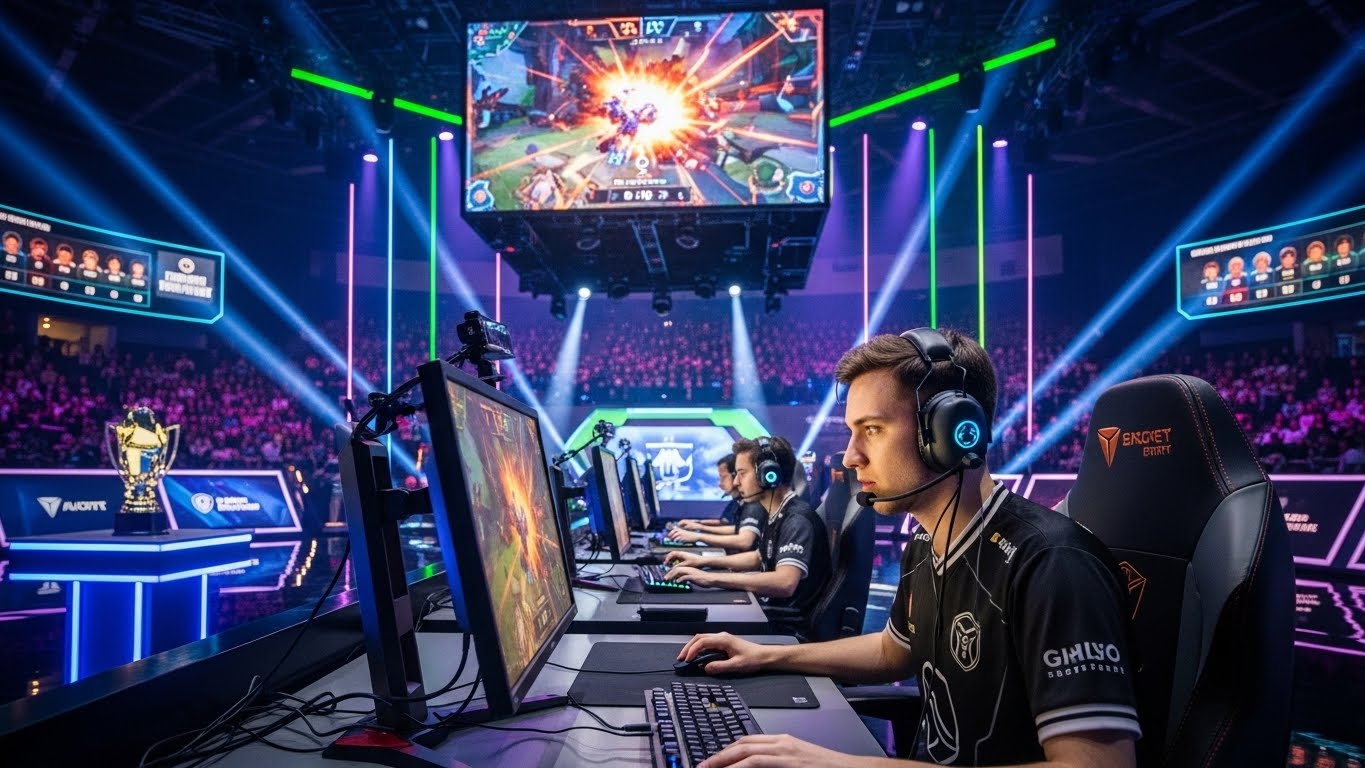
Esports, or electronic sports, has transformed from a niche hobby into a worldwide phenomenon that rivals traditional sports in viewership, revenue, and cultural influence. What began as casual competitions among friends has evolved into a multi-billion-dollar industry with professional leagues, international tournaments, and millions of passionate fans. Esports is not only redefining competitive gaming but also reshaping the broader entertainment landscape, education, and technology. In this blog, we will explore the evolution of esports, its current trends, challenges, and the future of competitive gaming.
The Origins of Esports: From Arcades to Online Arenas
The roots of esports can be traced back to the 1970s and 1980s, when players began competing in early video games like Space Invaders and Pac-Man. Tournaments were often small-scale events, organized in arcades or local communities. The first notable competitive gaming event, the Space Invaders Championship in 1980, drew thousands of participants and demonstrated the appeal of gaming competitions.
With the rise of home consoles and personal computers, competitive gaming expanded. Titles like Street Fighter, Mortal Kombat, and StarCraft gained competitive followings, creating communities and rivalries that fueled early esports culture. These games emphasized skill, strategy, and reflexes, laying the foundation for the structured competitions we see today.
The Evolution of Esports Leagues and Tournaments
The 2000s marked the professionalization of esports. Organized leagues, tournaments, and sponsorships transformed competitive gaming into a legitimate career path. Games such as Counter-Strike, Warcraft III, and Dota became staples of competitive gaming, offering prize pools and recognition for top players.
Major tournaments like the World Cyber Games and Electronic Sports World Cup helped standardize competition and attract global audiences. Over time, esports evolved from regional contests to international spectacles, with dedicated arenas, broadcast deals, and live audiences. The professionalization of esports created opportunities for players, coaches, analysts, and content creators, making the industry increasingly complex and structured.
Popular Esports Titles and Their Impact
Esports encompasses a wide variety of game genres, each with its own community and competitive ecosystem. Multiplayer online battle arena (MOBA) games like League of Legends and Dota 2 dominate global tournaments, drawing millions of viewers and offering multi-million-dollar prize pools. First-person shooters (FPS) such as Counter-Strike: Global Offensive, Call of Duty, and Valorant emphasize precision, strategy, and teamwork, attracting competitive communities worldwide.
Battle royale games like Fortnite and Apex Legends combine fast-paced gameplay with massive online participation, appealing to both casual and professional gamers. Fighting games, sports simulations, and strategy games also contribute to the diversity of esports, ensuring that players with different skills and interests can find their niche. The popularity of these titles drives innovation in gameplay, streaming, and audience engagement.
The Role of Streaming Platforms in Esports Growth
Streaming platforms have been instrumental in the rise of esports. Services such as Twitch, YouTube Gaming, and other live-streaming platforms allow players to broadcast their gameplay to global audiences in real time. These platforms not only provide exposure for professional players but also enable fans to interact directly through chat, donations, and subscriptions.
Streaming has created a new type of entertainment where audiences can learn strategies, engage with personalities, and follow tournaments from anywhere in the world. The combination of live content, social interaction, and competitive play has transformed esports into a highly engaging and accessible industry. It also provides supplementary income for players through sponsorships, advertising, and community support.
Esports as a Career: From Players to Professionals
Becoming a professional esports player requires skill, dedication, and strategic thinking. Competitive players often undergo rigorous training, practicing for hours each day to improve reaction time, teamwork, and game sense. Top-tier esports athletes participate in leagues, attend tournaments, and collaborate with coaches and analysts to maintain peak performance.
Beyond players, esports has created career opportunities in broadcasting, coaching, content creation, event management, marketing, and software development. Analysts break down gameplay, commentators narrate matches, and organizers ensure tournaments run smoothly. The ecosystem is multifaceted, reflecting the complexity and growth of the industry. Esports has become a viable career path for talented individuals willing to commit to the demands of professional gaming.
The Economic Impact of Esports
Esports is a rapidly growing industry with significant economic influence. Revenue streams include tournament prize pools, sponsorships, advertising, merchandise, media rights, and streaming subscriptions. Major tournaments now feature multi-million-dollar prize pools, attracting global attention and investment from traditional sports organizations, tech companies, and media enterprises.
Esports also drives technology and infrastructure development. High-performance gaming hardware, specialized peripherals, and fast internet networks are in high demand, fueling innovation in hardware design and connectivity. Sponsorships from brands in tech, fashion, energy drinks, and more demonstrate the marketability and influence of esports as a commercial platform.
Esports and Education: Nurturing the Next Generation
Education has recognized the potential of esports in skill development and career preparation. Many schools and universities now offer esports programs, combining competitive gaming with academic learning. These programs teach teamwork, strategic thinking, communication, and leadership skills, which are transferable to multiple career paths.
Collegiate esports leagues provide structured competition, scholarships, and training opportunities for young players. By integrating esports into educational institutions, society is acknowledging that gaming can be more than entertainment; it can be a tool for personal growth, academic engagement, and professional development.
Esports and Global Culture
Esports is not limited by geography. International tournaments connect players and fans from different countries, creating a shared global culture. Major events such as the League of Legends World Championship and The International for Dota 2 draw millions of viewers worldwide, showcasing not only skillful gameplay but also cultural exchange and collaboration.
The international appeal of esports is reflected in diverse team rosters, multi-language commentary, and worldwide fan communities. Online platforms allow fans to connect across continents, discuss strategies, and celebrate achievements. Esports fosters a sense of belonging, competition, and community, making it a cultural phenomenon as much as an entertainment industry.
Challenges Facing the Esports Industry
Despite its growth, esports faces challenges. Player burnout, mental health concerns, and intense competition can impact the well-being of professional gamers. Regulation and standardization of leagues, contracts, and tournament rules remain inconsistent in some regions, raising questions about fairness and career stability.
Additionally, the industry faces issues of inclusivity and diversity. Female players, minority groups, and players from underrepresented regions often encounter barriers to entry and recognition. Addressing these challenges is essential to creating a sustainable and equitable esports ecosystem.
The Future of Esports: Innovation and Expansion
The future of esports is promising, with opportunities for growth in technology, audience engagement, and market expansion. Virtual reality and augmented reality could redefine competitive gameplay, creating new immersive experiences for both players and spectators. Artificial intelligence may enhance training, strategy analysis, and personalized experiences for fans.
Esports will likely continue integrating with mainstream entertainment, collaborating with film, music, and sports industries. Expanding into mobile esports, casual competitive games, and global leagues ensures that audiences of all types can participate. As esports matures, it will solidify its status as a mainstream, culturally significant industry with broad influence on society, technology, and entertainment.
Conclusion: Esports as a Cultural and Competitive Force
Esports has evolved from small arcade competitions to a global phenomenon that rivals traditional sports in popularity and economic impact. It combines skill, strategy, technology, and community to create experiences that engage millions worldwide. The rise of professional leagues, streaming platforms, and international tournaments has transformed gaming into a serious career path and cultural force.
As the industry continues to grow, esports will face challenges related to player well-being, inclusivity, and regulation. However, the opportunities for innovation, global connection, and entertainment are immense. Esports is not just a form of gaming; it is a dynamic ecosystem that reflects human creativity, competitive spirit, and technological advancement. The future of competitive gaming promises excitement, innovation, and cultural significance for generations to come.