
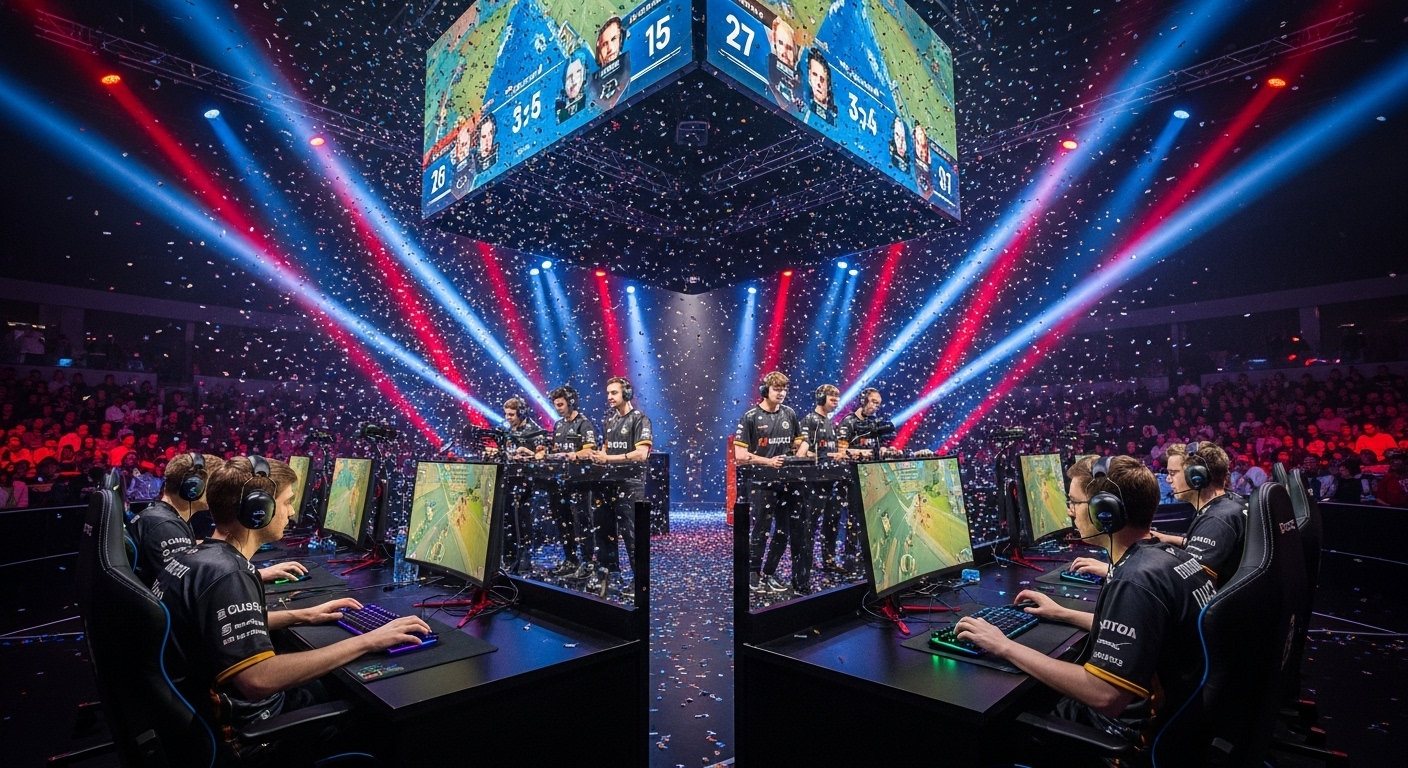
Esports has emerged as one of the most rapidly growing and culturally significant sectors of the entertainment industry in recent decades. What was once a niche pastime enjoyed by a select few is now a multi-billion-dollar global phenomenon. As technology has advanced, so too has the reach and scope of esports, capturing the attention of millions of fans worldwide. Today, competitive gaming is not just about playing games for fun; it’s about professional athletes competing for massive prizes, global recognition, and the thrill of victory.
In this blog post, we will explore the evolution of esports, its impact on gaming culture, the rise of competitive leagues, and the industry’s bright future. From the early days of arcade competitions to the modern-day spectacles featuring millions in prizes, esports has evolved into a powerhouse in the entertainment industry.
The Origins of Esports: Early Beginnings
Esports, or electronic sports, as the name suggests, has its roots in competitive gaming. The concept of players competing against one another in video games dates back to the early days of gaming itself, but it wasn’t until the late 1990s and early 2000s that esports began to take shape as a professional and organized activity.
The First Competitions
One of the first known competitive gaming events was the 1972 “Intergalactic Spacewar Olympics” at Stanford University. It may seem rudimentary by today’s standards, but this was a significant early step in the development of competitive gaming. The game played was Spacewar, one of the first multiplayer games developed for early computer systems.
However, esports as we know it today truly began to emerge in the late 1990s with the rise of the internet and home gaming consoles. StarCraft, Quake, and Warcraft were some of the first games to attract competitive players who formed local and online communities. These early competitions were primarily small-scale tournaments with limited prize pools but sparked a growing interest in the idea of competitive gaming.
In 1997, the first notable esports tournament, Red Annihilation, was held for the game Quake. This tournament is often cited as one of the first major esports events in history. The prize was a Ferrari, which was awarded to the winner, a nod to the serious potential for competition and prizes in the world of gaming.
The Rise of Online Communities
The real boom in esports occurred with the advent of online multiplayer gaming. With the rise of the internet in the late 90s and early 2000s, games like StarCraft and Warcraft III allowed players to compete against one another from all over the world. It was during this time that the first competitive leagues and organizations, such as Cyberathlete Professional League (CPL), were formed, creating a foundation for modern esports leagues.
These early leagues had small audiences compared to today’s massive viewership, but they established the essential structure that would eventually pave the way for the modern esports ecosystem. The internet allowed players to compete remotely, and soon, tournaments began to be streamed online, albeit in a much simpler form than what we see today.
The Growth of Esports: The Golden Age
By the mid-2000s, esports started to mature into a more serious and organized industry. High-profile games such as League of Legends, Counter-Strike, and Dota 2 brought competitive gaming to new heights. The competitive scene started to become more structured with organized leagues, sponsorships, and larger prize pools.
The Formation of Major Leagues and Tournaments
One of the first major turning points in esports was the creation of Major League Gaming (MLG) in 2002, which played a pivotal role in bringing esports into the mainstream. MLG organized large tournaments and competitions for games like Halo and Call of Duty, attracting not just players but a growing fanbase. As the internet grew and streaming platforms like Twitch emerged, the ability for fans to watch live esports events from home helped further cement competitive gaming as a legitimate form of entertainment.
By 2010, League of Legends was released by Riot Games, a game that would go on to become one of the most popular and influential games in esports history. Riot’s support for competitive gaming, including sponsoring tournaments with significant prize pools, helped establish League of Legends as the backbone of modern esports.
The success of LoL was followed by the rise of Dota 2, Counter-Strike: Global Offensive (CS: GO), Overwatch, and many others, all of which would come to host massive international tournaments with millions of dollars in prize money. This era of esports, marked by these big-name games, is often referred to as the “Golden Age” of esports because of the explosive growth in viewership, sponsorships, and prize money.
The Role of Streaming Platforms
Streaming platforms played a crucial role in bringing esports into the global spotlight. Twitch, which was founded in 2011, became the primary platform for streaming live esports events. The platform offered a space for professional gamers to stream their gameplay and for fans to watch high-level competitive matches live.
Twitch’s success was largely due to the fact that it made esports more accessible to viewers. Esports fans could now tune in to watch tournaments from around the world, engage in live chat, and support their favorite teams or players. The introduction of “esports commentary” and live analysis also made these broadcasts more engaging and professional, further cementing esports as a serious form of entertainment.
In 2014, Amazon acquired Twitch for nearly $1 billion, signaling the mainstream success of streaming as an essential platform for esports. Today, streaming is central to the growth of esports, with millions of viewers regularly watching major tournaments online.
The Rise of Esports as a Profession
One of the most significant developments in the esports world is the transition of competitive gaming from a hobby to a legitimate career option. Just as athletes in traditional sports train and compete for a living, professional esports players now dedicate their time to improving their skills, competing in tournaments, and gaining sponsorships.
The Professionalization of Esports
The professionalization of esports began with the formation of more organized teams and organizations. Many top esports teams are now structured like traditional sports teams, with coaches, analysts, and support staff helping players reach their peak potential. Some notable esports organizations include Team Liquid, Cloud9, Fnatic, and SK Telecom T1.
The rise of esports as a professional career also led to the establishment of esports-focused academies and training programs designed to nurture young talent. In addition, organizations like the Electronic Sports League (ESL) and DreamHack began hosting prestigious tournaments that were broadcasted worldwide, further enhancing the professional nature of esports.
Today, esports players can earn significant salaries from their tournament winnings, sponsorships, and streaming revenues. The top esports players are now seen as celebrities, with millions of fans following their careers and achievements.
Sponsorships and Revenue Streams
Sponsorships play a significant role in the esports industry. Global brands such as Coca-Cola, Intel, Red Bull, and Mercedes-Benz have invested heavily in esports, seeing it as a powerful platform to reach younger, tech-savvy audiences. These sponsorships help fund tournaments, support players, and ensure that esports events continue to grow in scale and reach.
In addition to sponsorships, esports also generates revenue through broadcasting rights, merchandise sales, ticket sales, and advertising. The combination of these revenue streams has turned esports into a billion-dollar industry, with major tournaments offering multi-million dollar prize pools.
Esports and its Cultural Impact
Esports has not only transformed the gaming world but has also had a significant cultural impact. Competitive gaming has become a social activity that brings people together from around the world. The esports community is diverse, inclusive, and passionate about gaming, with fans and players coming from all corners of the globe.
The Globalization of Esports
Esports has a truly global reach, with major tournaments being held in North America, Europe, Asia, and other parts of the world. Games like League of Legends and Dota 2 have international player bases, with players from multiple countries competing against one another. This globalization has fostered a unique sense of international community, where fans support teams and players from all over the world.
In fact, some of the biggest esports events, such as The International (Dota 2’s world championship), attract millions of viewers from across the globe. These events are watched in stadiums filled with thousands of fans, while millions more tune in online.
The Impact on Traditional Sports
Esports has even begun to encroach on the world of traditional sports. Several professional sports teams, including NBA franchises like the Philadelphia 76ers and the Cleveland Cavaliers, have invested in esports teams. The rise of esports has even sparked debates about whether esports should be included in the Olympics, as it has become an internationally recognized competitive discipline.
Esports also shares several similarities with traditional sports, such as the importance of teamwork, strategy, and skill. In many ways, esports can be seen as a new frontier for the sports industry, blending elements of gaming, competition, and entertainment in a unique way.
The Future of Esports
The future of esports looks incredibly bright. With increasing viewership, larger prize pools, and more mainstream sponsorships, esports is set to continue growing exponentially in the coming years. Several trends suggest that esports will become an even more integral part of mainstream entertainment.
The Growth of Mobile Esports
One of the most significant trends in esports is the rise of mobile gaming. As mobile phones become more powerful, games like PUBG Mobile and Clash Royale are creating new opportunities for esports on mobile platforms. This opens up esports to a whole new demographic, especially in regions like Southeast Asia and China, where mobile gaming is extremely popular.
Esports in Education and Colleges
Esports is also making its way into higher education. Many universities around the world now offer esports scholarships, and competitive gaming is being introduced as part of college sports programs. The increasing presence of esports in education indicates that the future of esports will be driven by a new generation of talent that sees gaming as a legitimate career path.
New Technologies and Innovations
Virtual reality (VR) and augmented reality (AR) are also poised to play a significant role in the future of esports. As these technologies mature, they will offer new ways for players to compete and fans to experience esports events. Imagine watching an esports tournament from the perspective of a player through VR or being able to interact with the game’s environment in new ways using AR.
Conclusion: Esports is Here to Stay
Esports has grown from a small community of players into a global entertainment powerhouse, and its journey is far from over. What began as a niche activity for a select group of gaming enthusiasts has evolved into a multi-billion-dollar industry with millions of fans, professional players, and massive tournaments.
The rise of esports has had a profound impact on gaming culture, entertainment, and even the traditional sports world. It has created new career opportunities for players, coaches, and broadcasters while bringing together fans from all over the globe.
Looking ahead, the future of esports looks incredibly promising. With the continued growth of mobile gaming, college esports programs, and emerging technologies like VR and AR, esports will continue to evolve and shape the entertainment landscape for years to come. Whether you’re a player, fan, or investor, there has never been a better time to get involved in the exciting world of esports.