
In the last two decades, esports has transformed from a small niche hobby into a massive global industry. What was once seen as “just playing video games” has become a legitimate form of competition, complete with professional teams, coaches, analysts, global tournaments, and millions of fans. The world of esports now rivals traditional sports in terms of viewership, sponsorships, and influence on youth culture. It’s more than just gaming—it’s a movement that’s reshaping entertainment, technology, and how we define competition itself.
The Early Days of Competitive Gaming
The foundation of esports can be traced back to the 1970s and 1980s, long before the internet connected players worldwide. The first known video game competition took place in 1972 at Stanford University for the game “Spacewar.” It was small, but it symbolized the birth of something new. As arcade machines became popular in the 1980s, games like Pac-Man, Donkey Kong, and Space Invaders saw players competing for high scores, often published in gaming magazines.
In the 1990s, with the rise of PC gaming and multiplayer titles like Doom, Quake, and StarCraft, competitive gaming started to evolve into organized events. Local area network (LAN) tournaments brought players together physically, and the first true professional gamers began to emerge. These events were smaller in scale compared to today’s massive arenas, but they built the foundation for what esports would become.
The Internet Revolution and Global Expansion
When broadband internet became widespread in the 2000s, everything changed. Online multiplayer gaming allowed players from different parts of the world to compete against each other instantly. Games like Counter-Strike, Warcraft III, and Dota turned into international sensations. South Korea, in particular, played a major role in shaping esports culture. The country treated gaming as a professional pursuit early on, with government support, dedicated esports channels on television, and major sponsorships.
StarCraft: Brood War became a cultural phenomenon in South Korea, turning players into celebrities. This was the first time esports achieved mainstream recognition. Around the same time, Western markets began developing their own competitive scenes, with games like Halo, Call of Duty, and Counter-Strike growing in popularity.
The Rise of Major Esports Titles
Every era of esports is defined by its dominant games. In the late 2000s and 2010s, a new generation of titles solidified esports as a global phenomenon.
League of Legends, launched in 2009, became a cornerstone of competitive gaming. With its deep mechanics and team-based strategy, it developed a dedicated fan base and professional scene almost immediately. Riot Games capitalized on this momentum by creating structured leagues, regional competitions, and the annual World Championship, which attracts millions of viewers.
Dota 2, another major title, raised the bar for prize pools with The International, an annual tournament where fans could contribute to the winnings through in-game purchases. The International’s prize pool has repeatedly surpassed tens of millions of dollars, setting records in the gaming industry.
Counter-Strike: Global Offensive, known for its simplicity and intensity, has also been a mainstay in esports. With tournaments like ESL One and the BLAST Premier series, CS:GO became synonymous with high-level FPS competition.
Then came Fortnite, PUBG, and Valorant, which further expanded the audience for esports. These games appealed to both casual players and hardcore competitors, blurring the line between entertainment and professional competition.
The Role of Streaming and Social Media
The true catalyst for esports’ explosion was not just better games but better visibility. Platforms like Twitch and YouTube Gaming revolutionized how fans consume gaming content. Suddenly, anyone could watch live matches, follow their favorite players, and even interact with them in real time.
This accessibility created a new kind of celebrity: the gamer-streamer. Players like Ninja, Faker, s1mple, and Shroud became household names, not only for their skills but for their personalities and online presence. Social media further amplified this, allowing esports stars to build brands and connect directly with fans.
Esports organizations quickly realized that visibility was key to success. Teams began to function like traditional sports franchises, complete with branding, merchandise, and fan engagement strategies. The synergy between streaming and professional play became one of esports’ greatest strengths, turning tournaments into global media events.
Esports Arenas and Massive Events
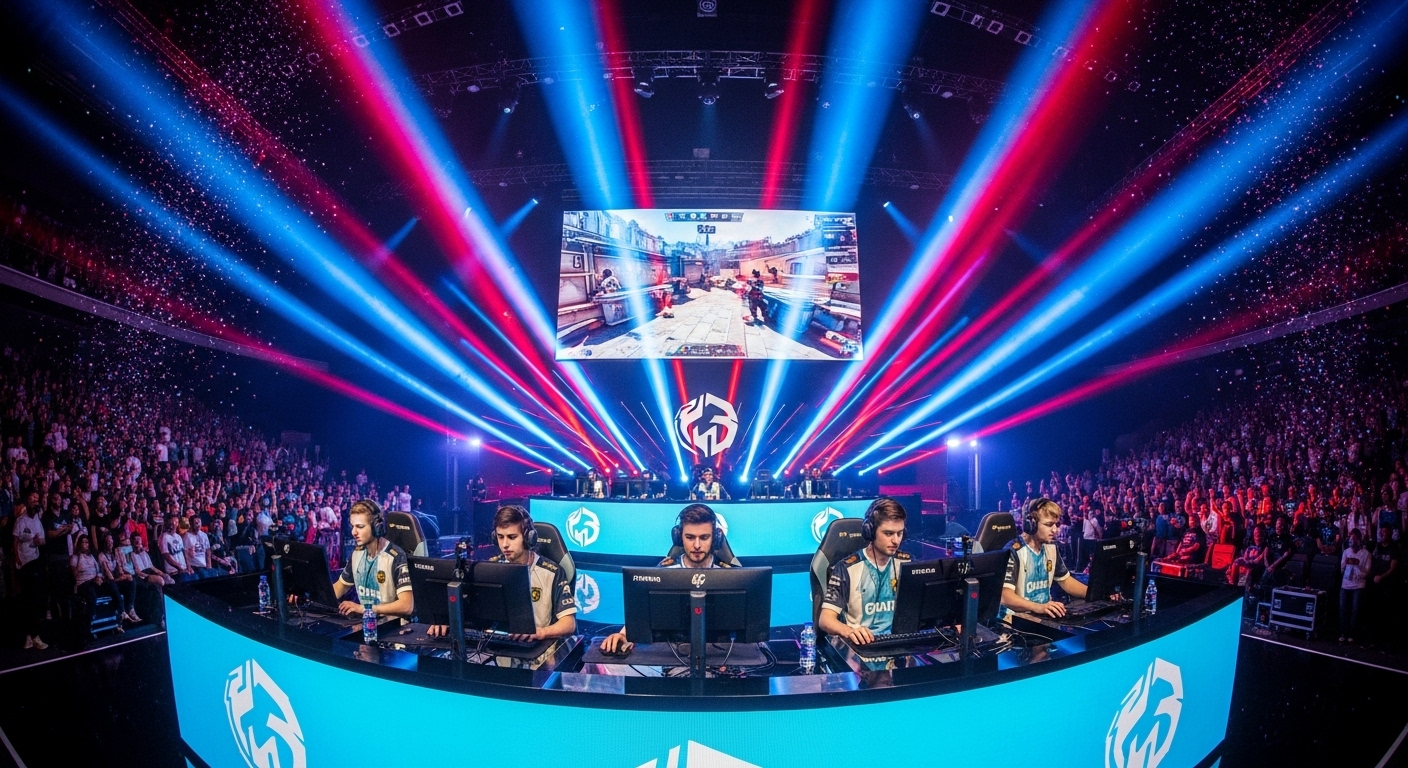
Gone are the days when esports tournaments were confined to basements or small convention halls. Today, esports events fill massive arenas and stadiums across the world. Venues like the Staples Center in Los Angeles and Madison Square Garden in New York have hosted major tournaments, drawing tens of thousands of in-person attendees and millions more online.
The production value of these events rivals that of traditional sports broadcasts. Professional commentary, slow-motion replays, pyrotechnics, and stage lighting all add to the spectacle. Major tournaments are streamed globally, often in multiple languages, with broadcasters and analysts providing expert insights.
One of the most defining aspects of these events is their energy. The cheers, chants, and emotional highs create an electric atmosphere that mirrors the passion found in traditional sports. Fans travel across continents to witness their favorite teams compete live, making esports not just a competition but a shared cultural experience.
The Business of Esports
The business side of esports has grown rapidly. Sponsorships from major global brands, media rights deals, and merchandise sales all contribute to a booming industry worth billions. Companies like Coca-Cola, Intel, and Mercedes-Benz sponsor tournaments and teams, recognizing the marketing potential in reaching a young, tech-savvy audience.
Esports organizations now function like startups or entertainment companies. They sign professional players, manage content creators, and build brand partnerships. Top organizations like T1, Cloud9, Fnatic, and Team Liquid have diversified their revenue streams beyond tournament winnings, focusing on apparel, media, and technology.
Prize pools in esports are also staggering. The International, League of Legends World Championship, and Fortnite World Cup have all awarded multi-million-dollar prizes. This financial growth has made professional gaming a viable career path for many young players worldwide.
Training, Coaching, and Professionalism in Esports
Behind every great esports team is a rigorous structure of practice and preparation. The stereotype of gamers playing casually in their bedrooms no longer applies. Today’s professional players follow strict routines, spending hours analyzing gameplay, scrimming (practice matches), and reviewing opponents’ strategies.
Teams employ coaches, analysts, nutritionists, and even psychologists to maintain performance and mental health. Esports houses—shared living and training spaces—allow players to train together in a structured environment, similar to sports training camps.
This professionalization has raised the overall quality of competition. Matches are faster, strategies more complex, and the skill ceiling higher than ever before. It has also brought discussions about burnout and work-life balance, pushing the industry to prioritize player well-being.
The Impact of Esports on Youth and Culture
Esports has become deeply embedded in youth culture. For millions of young people, watching esports is as normal as watching football or basketball. It has changed how a generation views competition, entertainment, and even career aspirations.
Colleges and universities around the world now offer esports scholarships, recognizing gaming as a legitimate extracurricular pursuit. High schools host competitive leagues, encouraging teamwork, communication, and strategy among students.
Moreover, esports has created new forms of social interaction. Friends across continents can team up, compete, and share victories in real time. Gaming communities have become digital gathering spaces, transcending geographical and cultural barriers.
Women in Esports: Breaking Barriers
While esports has traditionally been male-dominated, women are increasingly making their mark. Female players, casters, and team managers are gaining visibility and recognition. Organizations are actively working to create more inclusive spaces, promoting diversity and equal opportunities.
Players like Sasha “Scarlett” Hostyn in StarCraft II and Julia “Juliano” Kiran in CS:GO have shown that skill knows no gender. Additionally, all-female tournaments and mixed-gender leagues are helping to reshape perceptions about who can compete at the highest level.
The conversation around diversity and inclusion continues to evolve, with many esports communities advocating for safer online environments and equal representation.
Technology and Innovation in Esports
Technology is the lifeblood of esports. Advances in hardware, software, and streaming platforms have all contributed to its growth. High-refresh-rate monitors, powerful GPUs, and low-latency connections enable the precision needed at the professional level.
Virtual reality (VR) and augmented reality (AR) are starting to enter the esports space, promising entirely new forms of competition. Similarly, artificial intelligence is being used for strategy analysis, player performance tracking, and matchmaking.
The integration of blockchain technology and digital collectibles has also become a trend, giving fans new ways to engage with teams and players through in-game assets and NFTs. While controversial, these innovations show how esports continues to push the boundaries of digital entertainment.
Esports and Traditional Sports: A Growing Relationship
At first, traditional sports organizations viewed esports as a novelty. Now, they see it as a partner. Many professional sports teams have invested in esports divisions or formed collaborations with gaming organizations. The NBA, for instance, created the NBA 2K League, blending basketball and gaming in an official competition.
The crossover extends beyond business. Athletes like David Beckham, Steph Curry, and Neymar have publicly supported or invested in esports teams. This relationship bridges the gap between physical and digital sports, showing how both can coexist and appeal to different audiences.
Esports events are also being broadcast on mainstream sports networks, and gaming highlights often appear alongside traditional sports clips. This cultural fusion highlights how esports has gained mainstream respect.
Challenges and Controversies in Esports
Despite its success, esports faces challenges. Issues like player burnout, lack of regulation, match-fixing scandals, and inconsistent tournament structures have raised concerns. The pressure of constant competition can take a toll on mental health, leading many players to retire young.
There’s also the question of sustainability. While top-tier teams and events generate huge revenues, smaller leagues often struggle to maintain financial stability. Balancing profitability with player welfare remains a central issue for the industry.
Toxicity in online gaming environments continues to be a problem as well. Esports organizations and developers are increasingly focused on promoting positive player behavior and enforcing strict codes of conduct.
The Future of Esports
Looking ahead, the future of esports appears brighter than ever. Global viewership continues to rise, and the next generation of players is growing up in an era where esports is mainstream. With technological advancements, the integration of virtual reality, and improved accessibility, the scope of competition will only expand.
There’s potential for esports to become part of global sporting events like the Olympics, which have already shown interest in virtual competitions. This would represent a new level of recognition for gaming as a legitimate athletic and strategic pursuit.
Educational programs focusing on game design, management, and marketing are also preparing future professionals to build careers in the esports ecosystem. From broadcast production to data analytics, the opportunities are vast and varied.
Conclusion: A Digital Revolution in Motion
Esports is more than a trend—it’s a revolution that has redefined what it means to compete, entertain, and connect. It’s a space where strategy meets technology, where digital athletes push their limits just like traditional sports icons.
From small local tournaments to massive global championships, the journey of esports reflects human creativity and passion for competition. As technology continues to evolve and society becomes more interconnected, esports will remain at the forefront of digital culture.
In the end, esports is not just about games—it’s about people. It’s about the excitement of competition, the thrill of victory, and the sense of belonging in a global community. Whether you’re a player, a fan, or a casual viewer, one thing is certain: the era of esports is here to stay.