
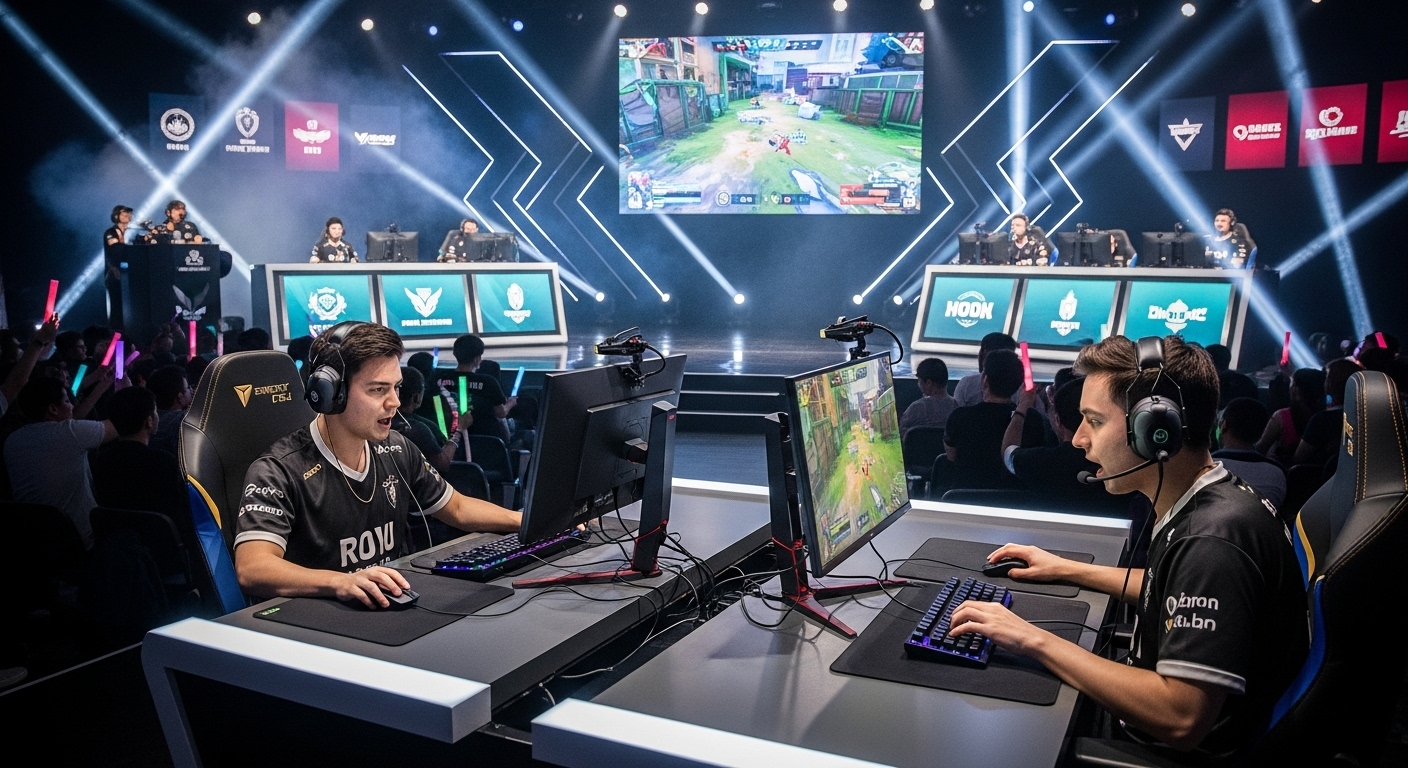
Introduction: A New Era of Competition
The landscape of competitive sports has undergone a radical transformation in the 21st century. The roar of stadiums and the sweat of athletes are no longer the only symbols of competition. A digital frontier has emerged where skill, strategy, and precision are tested in front of global audiences. This is the world of esports—electronic sports—a phenomenon that has transcended casual gaming to become a mainstream, billion-dollar industry. What began as small-scale gaming tournaments has now evolved into a cultural, economic, and technological force that redefines what it means to be an athlete in the modern era.
Esports is more than just playing games; it is a spectacle that blends technology, entertainment, and competition. Millions of players and fans worldwide participate in this digital universe, shaping a culture that is both dynamic and inclusive. In exploring esports, one discovers not only a thriving industry but also a reflection of society’s shift toward virtual engagement and global connectivity.
The Origins of Competitive Gaming
The seeds of esports were planted decades ago, in the era of arcades and early home consoles. In the late 1970s and early 1980s, simple games like Space Invaders and Pac-Man introduced players to competition through high scores. Tournaments were local, small-scale affairs, but they fostered a community spirit that would later define competitive gaming.
The 1990s brought technological advancements and the rise of multiplayer PC games. Titles like Street Fighter II, Quake, and StarCraft turned gaming into a serious competitive activity. LAN parties, where players connected computers on a local network, became the breeding ground for strategy, skill, and teamwork. These events were the foundation of the esports culture, demonstrating that gaming could be more than entertainment—it could be a pursuit of excellence.
The real breakthrough came with the internet. Global connectivity allowed players to compete across continents in real-time, creating new possibilities for competition and spectatorship. The stage was set for the modern esports ecosystem, where professional leagues and live streaming would transform gaming into a global spectacle.
The Rise of Esports as an Industry
The 2010s marked the rapid rise of esports as a professional industry. Games such as League of Legends, Dota 2, Counter-Strike: Global Offensive, Overwatch, and Fortnite became competitive platforms that attracted millions of players and fans. These games developed structured leagues, sponsored tournaments, and professional teams, mimicking the organization and professionalism of traditional sports.
Esports tournaments now fill arenas and stadiums, drawing audiences comparable to major sporting events. Millions more watch online via streaming platforms, creating a highly engaged global fanbase. The industry has grown to include not only players but also coaches, analysts, broadcasters, and event organizers. Sponsorship deals, merchandise sales, and media rights have turned esports into a multi-billion-dollar economy, rivaling traditional sports in commercial impact.
The professionalization of esports has elevated gaming from a casual hobby to a career path. Today, players train rigorously, study strategies, and compete under intense pressure, showcasing talent, precision, and mental fortitude that rivals conventional athletes.
The Esports Athlete: Skill, Strategy, and Dedication
Professional gamers are athletes in their own right. Their skills encompass more than quick reflexes; they include strategic thinking, teamwork, communication, and adaptability. Training schedules are intense, often exceeding six to eight hours a day, involving practice, analysis of opponents, and coordination with team members.
Mental resilience is critical. Esports athletes face high-pressure scenarios where a single misstep can determine victory or defeat. Teams now employ psychologists, coaches, and fitness experts to ensure that players maintain both mental and physical health. Reaction times of professional players are measured in milliseconds, reflecting a level of precision that challenges the definition of athleticism.
The discipline required in esports also highlights its legitimacy as a professional pursuit. The commitment to consistent performance, skill development, and competitive excellence mirrors the demands placed on athletes in traditional sports, demonstrating that esports is more than entertainment—it is a rigorous professional endeavor.
Technology: The Engine of Esports Growth
Technological innovation has been a driving force behind the growth of esports. High-speed internet, advanced gaming hardware, and sophisticated graphics engines have made competitive play seamless and immersive. Live streaming platforms allow millions to watch competitions in real-time, creating a direct connection between players and audiences.
The future of esports will likely be shaped by emerging technologies such as virtual reality and augmented reality. VR and AR could redefine the spectator experience, offering immersive perspectives and interactive gameplay. Artificial intelligence may also play a role in strategy development, performance analysis, and coaching, pushing the boundaries of what is possible in digital competition.
Technology has not only enhanced gameplay but also enabled esports to reach a global scale. Spectators from any corner of the world can watch live matches, follow their favorite teams, and participate in online communities, making esports a uniquely interconnected and inclusive form of entertainment.
The Culture of Esports: Community and Identity
Esports has cultivated a vibrant culture that thrives on community and shared passion. Fans connect through forums, live streams, social media, and events, creating a sense of belonging that transcends geographical boundaries. The culture emphasizes creativity, collaboration, and the celebration of skill.
Streaming personalities and content creators are central to this culture. They entertain, educate, and engage audiences while shaping the narratives around esports. For fans, watching a favorite player or team is not only about competition but also about connection, identity, and emotional investment.
Inclusivity is also a defining aspect of esports culture. While traditional sports may impose physical limitations, esports allows anyone with skill and dedication to compete at the highest level. This has opened doors for greater gender diversity and participation from underrepresented groups, gradually reshaping the perception of competitive gaming.
Education and Career Opportunities
Esports has transformed career and educational opportunities. Universities offer scholarships for competitive gaming, while academic programs in esports management, broadcasting, and game design are emerging worldwide. Students study the business, technology, and psychology of esports, preparing for careers in an industry that is both dynamic and innovative.
Professional opportunities extend beyond playing. Analysts, coaches, event organizers, content creators, and media specialists are integral to the ecosystem. Esports journalism and production have become professional fields, supporting the growth and sustainability of the industry.
For young people, esports provides not only entertainment but also pathways for skill development, teamwork, and problem-solving. What was once dismissed as a leisure activity is now a legitimate avenue for career advancement and personal growth.
Economic Impact and Global Reach
The economic footprint of esports extends beyond the industry itself. Sponsorship deals, brand collaborations, and advertising opportunities generate significant revenue. Companies recognize esports as a platform to engage one of the most dedicated and youthful audiences in the world.
Major tournaments attract global audiences, driving tourism and economic activity in host cities. The industry supports job creation, media production, and technological innovation, influencing economies at both local and international levels. Emerging regions are increasingly investing in esports infrastructure, signaling a truly global expansion of competitive gaming.
Esports has become a cultural and economic phenomenon, shaping trends in entertainment, technology, and consumer behavior. Its impact is both immediate and far-reaching, influencing industries well beyond gaming.
Challenges Facing Esports
Despite its growth, esports faces several challenges. Player burnout and mental health concerns are significant, as young athletes navigate intense training schedules and competitive pressure. Career longevity is often short, with peak performance typically lasting only a few years.
Regulatory and governance issues also pose challenges. With multiple leagues, publishers, and organizations, there is no single governing authority, leading to inconsistencies in rules, contracts, and player protection. Addressing these challenges is essential for the sustainability and legitimacy of the industry.
Additionally, online harassment and toxicity remain concerns within some gaming communities. Promoting positive behavior, inclusivity, and mental well-being is crucial for the continued growth of esports.
The Future of Esports
The future of esports is bright and full of potential. Technological advancements, global expansion, and cultural integration will continue to drive growth. Virtual reality, artificial intelligence, and innovative streaming experiences will redefine both gameplay and spectatorship.
Esports is likely to become increasingly intertwined with education, entertainment, and mainstream media. Crossovers with music, film, and other digital experiences will create immersive, multi-layered experiences for audiences. Regions across the globe, including emerging markets, are contributing to the expansion of esports, ensuring its presence as a truly global phenomenon.
The evolution of esports reflects society’s growing embrace of digital experiences and the expanding definition of competition in the modern era.
Conclusion: A Revolution in Competition
Esports is more than a trend—it is a cultural and professional revolution. It has transformed the concept of athleticism, created global communities, and established a multi-billion-dollar industry that rivals traditional sports. Players are athletes, fans are engaged communities, and technology drives a constantly evolving landscape.
From small arcade competitions to global tournaments with millions of viewers, esports represents the future of competitive entertainment. It is a testament to human creativity, adaptability, and the enduring desire to connect, compete, and excel in new and innovative ways. As esports continues to grow, it will remain a powerful symbol of the digital age and the limitless potential of competition in a connected world.